Decode Scripture
An Entire Religion Was Named After a Man Who Fought God - Decoded Map
An Entire Religion Was Named After a Man Who Fought God - Decoded Map
Couldn't load pickup availability
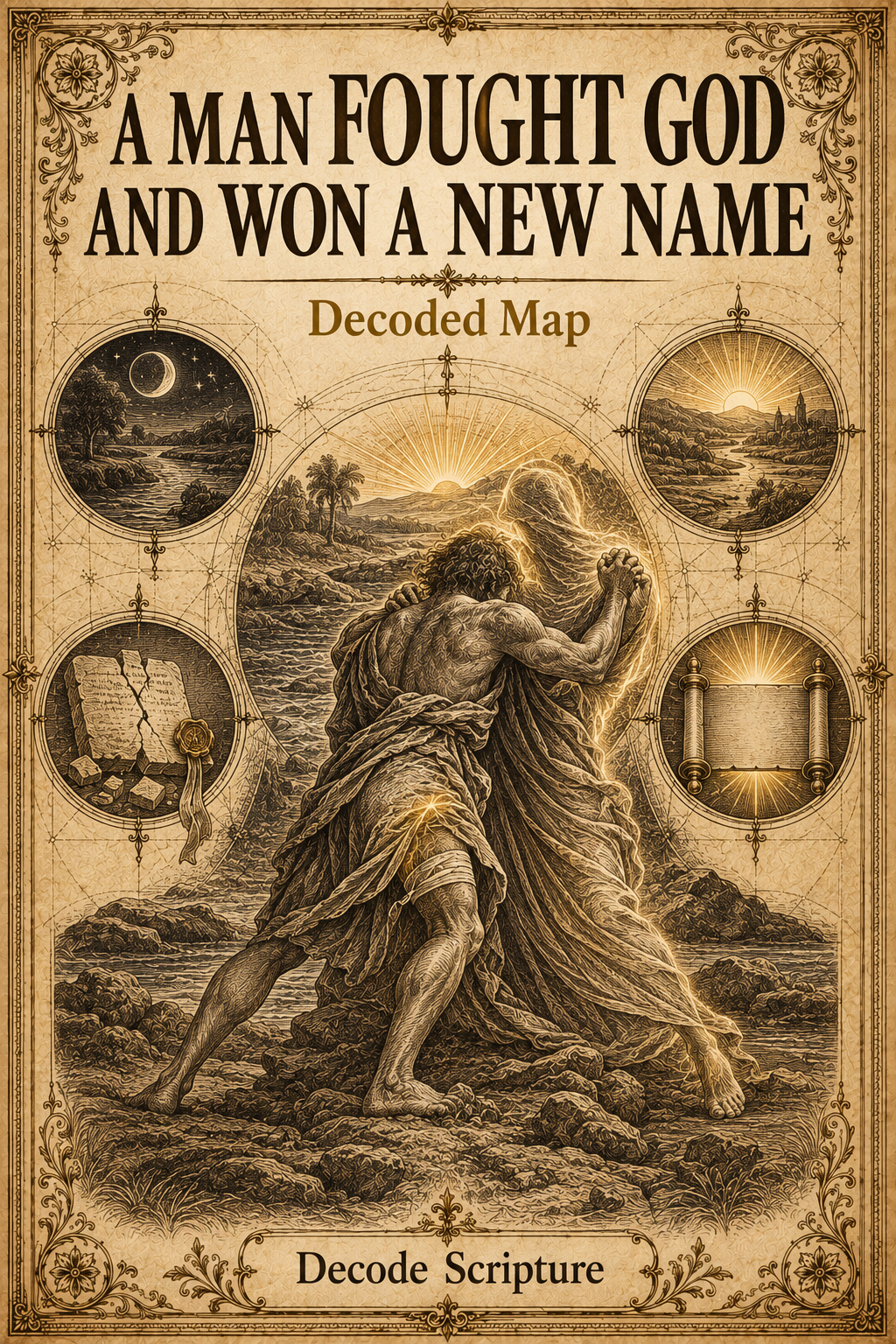
Go deeper into the Decode Scripture episode with this printable Decoded Map on Jacob wrestling at the Jabbok and receiving the name Israel.
This PDF companion is designed for personal study and helps you revisit the core structure behind the episode in a clear, written format.
Inside, you'll find:
• the surface reading of Jacob's wound as God breaking his pride and teaching surrender
• the decoded meaning of the struggle as the very encounter that gives birth to the name Israel
• key verses decoded from Genesis 32:24, 32:25, 32:26, 32:28, 32:31, Genesis 25:26, Hosea 12:3-4, and Genesis 32:32
• the Hebrew connection between Ya'aqov, aqab, sarah, El, and Yisra'el
• the significance of Jacob refusing to release his grip even after his hip is wounded
• the connection between the Jabbok wound and the gid hanasheh practice preserved in Genesis 32:32
• rabbinic, prophetic, and Ancient Near Eastern notes on naming, identity, covenant, and struggle
• a practice section centered on the idea that the struggle itself may be part of the sacred encounter
This Decoded Map explores Jacob's wrestling at the Jabbok not as a story about a proud man finally being forced into submission, but as the founding struggle that gives him the name Israel.
The text says Jacob wrestled from darkness until dawn, refused to let go after being wounded, demanded a blessing, and was then given a new name. The explanation appears in the same verse: he struggled with God and with men and prevailed.
The map follows the movement from Ya'aqov, connected with the heel and the identity of the heel-grabber, supplanter, and schemer, to Yisra'el, built around the rare Hebrew verb sarah and El. The old identity associated with reaching from behind is replaced by an identity born from direct struggle.
Genesis 32:28 and Hosea 12:3-4 are placed together to show that the later prophetic text does not erase Jacob's agency. Hosea looks back at the same event and again describes him as striving and prevailing.
The study also examines the wound itself. Jacob walks away limping, but the injury does not cancel the blessing. Genesis 32:32 carries the event forward into practice through the gid hanasheh prohibition, connecting the bodily wound at the Jabbok with the continuing identity of the people who bear the name Israel.
The cross-tradition section explores Rabbi Jonathan Sacks' emphasis on the significance of the covenant people being called the children of Israel, the prophetic witness of Hosea, and the weight of name changes in the Ancient Near Eastern world.
The language section examines Ya'aqov, sarah, Yisra'el, and gid hanasheh, while the naming notes explore how a change of name could signify the end of one identity and the beginning of another.
The practice section returns to the central tension of the story: Jacob was not condemned for wrestling. He was named, blessed, and transformed. The map asks what changes when struggle is no longer treated only as the obstacle to the sacred encounter, but as part of the encounter itself.
Important: If you are already a Cartographer member, do not purchase this separately. This Decoded Map is already included in your membership library.
This single purchase is for viewers who want the written companion map for one public Decode Scripture episode as a standalone download.
For access to all current public episode maps, future maps, members-only videos, and members-only PDFs, join The Cartographer tier.
Delivery: This is a digital download. No physical item will be shipped.
Share